
Indigenous Curatorial Collective
Activating Indigenous Creative Sovereignty
The Indigenous Curatorial Collective / Collectif des commissaires autochtones (ICCA) is an Indigenous run and led non-profit organization that aims to support and connect fellow Indigenous curators, artists, writers, academics, and professionals through various methods of gathering. The ICCA engages in critical discourses, increases professional opportunities for our members, develops programming, and most importantly works to build reciprocal relationships with Indigenous curators, artists, communities and the institutions we engage with.
Address: 280 Catherine Street, Ottawa, ON K1R 5T3
Email: info@icca.art
Vision
The ICCA activates Indigenous creative sovereignty, ensuring future ancestors have agency over their own cultures as an Inherent Right.
Mission
We support and advocate for Indigenous curators by building networks across generations, nations, and territories to advance Indigenous ways of being and knowing in the arts.
Honour Statements

We cultivate and nurture Indigenous arts communities to tell our stories on our terms.

We honour our practices of gathering to share collective and cultural knowledge.

We honour many cultural protocols and support the creation of new protocols.

We honour our responsibility as hosts to ensure inclusive and accessible spaces for many people.
Indigenous Curatorial Collective : Staff
Liz Barron
Director of Operations
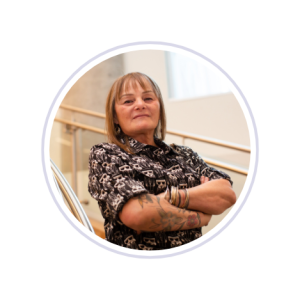 Liz Barron is a Métis arts powerhouse with deep family roots in St. Francois Xavier and Pigeon Lake. Self-employed in the arts for the last 25 years, Liz has been a lifelong champion of Indigenous contemporary art. She is dedicated to building strategies and programs that target, motivate, and engage Indigenous artists and organizations working in all cultural milieu. Liz kicked off her career at Plug In ICA and went on to co-found Urban Shaman Gallery over 30 years ago. Her skills in arts management include experience working with CARFAC, the Ottawa Symphony Orchestra, and numerous Indigenous-led arts and culture not-for-profits. Liz has also served as a mentor with the Manitoba Music Indigenous Mentorship program. She was the project manager for one of the largest Indigenous contemporary exhibitions in Canada, Close Encounters: The Next 500 Years, led by four Indigenous curators which featured over 30 Indigenous contemporary artists. In 2021, she started the Barron Bursary at Digital Arts Resource Centre in Ottawa, to support an Indigenous moving image maker to study film at the University of Ottawa. Having also managed a baroque orchestra and a new music ensemble, Liz brings passion, humor, and a whole lot of lived experience to everything she does. She is a die-hard Prince fan, a road trip enthusiast, and the proud human of Lucy, her trusty Shih Tzu sidekick.
//
Liz Barron est une force vive métisse dans le domaine des arts, avec de profondes racines familiales à Saint-François-Xavier et Pigeon Lake. Auto-entrepreneure dans le secteur artistique depuis 25 ans, Liz est une championne de longue date de l’art contemporain autochtone. Elle se consacre à l’élaboration de stratégies et de programmes qui ciblent, motivent et engagent les artistes et les organisations autochtones travaillant dans tous les milieux culturels. Liz a débuté sa carrière à Plug In ICA et a ensuite cofondé la galerie Urban Shaman il y a plus de 30 ans. Ses compétences en gestion des arts comprennent une expérience de travail avec CARFAC, l’Orchestre symphonique d’Ottawa et de nombreux organismes sans but lucratif dirigés par des Autochtones dans le domaine des arts et de la culture. Liz a également été mentor dans le cadre du programme de mentorat autochtone de Manitoba Music. Elle a été la gestionnaire de projet de l’une des plus importantes expositions d’art contemporain autochtone au Canada, Rencontres rapprochées : Les 500 prochaines années, dirigée par quatre conservateurs autochtones et présentant plus de 30 artistes contemporains autochtones. En 2021, elle a créé la bourse Barron au Digital Arts Resource Centre à Ottawa, afin de soutenir un créateur d’images animées autochtone étudiant le cinéma à l’Université d’Ottawa. Ayant également géré un orchestre baroque et un ensemble de musique nouvelle, Liz apporte passion, humour et une riche expérience de vie à tout ce qu’elle entreprend. Elle est une fan inconditionnelle de Prince, une passionnée des voyages en voiture et la fière humaine de Lucy, sa fidèle acolyte Shih Tzu.
Justine “Tini” Stilborn
Programmes Manager
 Justine “Tini” Stilborn is a Regina-based artist & designer. She is a woman (she/hers) of Indigenous (Metis/Swampy Cree), Romanian, Scottish, and mixed Settler descent, and identifies as bisexual. She earned a Bachelor in Fine Arts degree from the University of Regina, majoring in Visual Arts (Drawing) with a Minor in Art History.
Justine is currently serving as the Programmes Manager at the Indigenous Curatorial Collective (ICCA) where she oversees the development of programming that amplifies Indigenous participation in curations and the arts. A dedicated advocate, she serves on the CARFAC National Board as 2nd Vice President, the City of Regina’s Civic Art and Cultural Collections Sector Reference Group, and is a Mackenzie Art Gallery Ambassador. In addition to being a freelance artist, she specializes in graphic design, branding, and illustration, supporting both arts organizations and community initiatives.
//
Justine « Tini » Stilborn est une artiste et designer basée à Regina. C’est une femme (elle) d’ascendance autochtone (métisse/crie des marais), roumaine, écossaise et coloniale mixte, et elle s’identifie comme bisexuelle. Elle a obtenu un baccalauréat en beaux-arts de l’Université de Regina, avec une majeure en arts visuels (dessin) et une mineure en histoire de l’art.
Justine occupe actuellement le poste de gestionnaire des programmes au Collectif des commissaires autochtones (ICCA), où elle supervise l’élaboration de programmes visant à amplifier la participation des Autochtones au commissariat d’exposition et aux arts. Dédiée à la défense des droits des artistes, elle siège au conseil d’administration national de CARFAC en tant que 2e vice-présidente, au groupe de référence sectoriel sur les collections d’art civic et culturelles de la ville de Regina, et est ambassadrice de la MacKenzie Art Gallery. En plus de son travail d’artiste indépendante, elle se spécialise en graphisme, en image de marque et en illustration, soutenant ainsi des organismes artistiques et des initiatives communautaires.
Justine “Tini” Stilborn

Amanda Ibarra
Membership Coordinator
 Amanda Ibarra is a Chilean / Kanien’kehá:ka (Kahnawá:ke) woman based in Tiohtià:ke/ Montreal. She is a freelance graphic designer and beadworker (Wariso:se Beadwork). Her past experience has been in cultural and community organization, communications and outreach as well as project management. Amanda works part time at daphne, Tiohtià:ke’s first Indigenous artist run center.
//
Amanda Ibarra est une femme chilienne / Kanien’kehá:ka (Kahnawá:ke) établie à Tiohtià:ke / Montréal. Elle est graphiste pigiste et perleuse (Wariso:se Beadwork). Elle possède une expérience dans les domaines de l’organisation culturelle et communautaire, des communications, de la sensibilisation ainsi que de la gestion de projets. Amanda travaille à temps partiel chez daphne, le premier centre d’artistes autogéré autochtone à Tiohtià:ke.
Billy Parrell
Administrative Assistant

Taanishi! Billy Parrell is a mixed Irish and Métis Two-Spirit interdisciplinary artist, workshop facilitator, and emerging curator. Their family is from Saint François Xavier of the Red River Métis settlement in Manitoba, with family names including Zastre, Parisien, Lépine, Bercier, and Larocque. Growing up off-settlement, Billy currently has the privilege to live on the beautiful Dish With One Spoon territory in Hamilton, Ontario. Their practice is rooted in themes of belonging, movement, and reciprocity. Billy began their career in community arts, where they developed a passion for collaboration and facilitation, and their workshops explore Métis material culture and history. They have worked with organizations such as the Laidlaw Foundation, Connected North, and the Victoria Native Friendship Centre. Billy’s current projects include finishing an independent short film titled Gay Métis Cowgirls, centered on intergenerational healing, and completing a programming mentorship with the Toronto Queer Film Festival and the Indigenous Screen Office.
//
Taanishi! Billy Parrell est iel une artiste interdisciplinaire, animatrice d’ateliers et commissaire émergente métisse et irlandaise bi-spirituelle. Sa famille est originaire de Saint-François-Xavier, une communauté métisse de la rivière Rouge au Manitoba, et compte parmi ses patronymes Zastre, Parisien, Lépine, Bercier et Larocque. Ayant grandi hors établissement, Billy a aujourd’hui le privilège de vivre sur le magnifique territoire du bol à une seule cuillère (Dish With One Spoon) à Hamilton, en Ontario. Sa pratique s’articule autour des thèmes de l’appartenance, du mouvement et de la réciprocité. Billy a commencé sa carrière dans les arts communautaires, où s’est développée sa passion pour la collaboration et l’animation, et ses ateliers explorent la culture matérielle et l’histoire métisses. Billy a collaboré avec des organismes tels que la Fondation Laidlaw, Connected North et le Victoria Native Friendship Centre. Ses projets actuels comprennent la réalisation d’un court métrage indépendant intitulé Gay Métis Cowgirls, axé sur la guérison intergénérationnelle, ainsi qu’un mentorat en programmation auprès du Toronto Queer Film Festival et du Bureau de l’écran autochtone.
David Krouse
Information Manager
 David Krouse is a computational media artist from the Wikwemkoong First Nation, based in Winnipeg, Manitoba. He holds a Bachelor of Arts degree in Indigenous Studies from the University of Manitoba. For over two decades, David has worked at the intersection of art and technology, supporting artists and galleries in developing web-based and digital exhibitions, while also creating his own computer-generated artworks. His work has been exhibited at venues including Urban Shaman Gallery, the Winnipeg Indigenous Film Festival, Struts Gallery, and the Halifax Independent Filmmakers Festival.
David’s artistic practice explores the integration of digital media, game engines, and video. His current project, Red Realms / Real Dreams: The Surreal Adventures of the Urban Hunter-Gatherer, is a mixed-media experimental website that uses computational tools to present immersive narratives. A passionate advocate for emerging media, David specializes in VR180 filmmaking—a stereoscopic video format for virtual reality headsets—and is developing hybrid experiences that blend VR film with interactive game technology, accessible through devices like the Google Cardboard. David describes his work as a speculative reflection on contemporary Indigenous realities, envisioned from a future perspective. Influenced by early digital cinema such as Tron (1982), his practice centers on the concept of telepresence—the experience of being in a space without physically being there. His work is available at RedRealms.ca.
David has designed and launched two bilingual, accessible online exhibitions through the Virtual Museum of Canada: Storm Spirits: Aboriginal New Media Art, and Bob Boyer: His Life’s Work. He has served on peer assessment juries for the Canada Council for the Arts and the Manitoba Arts Council, and previously served as President of the University of Manitoba Aboriginal Students Association, where he led successful campaigns for increased student group funding, the creation of an Indigenous Food Bank, and campus-wide awareness of Indigenous issues.
David’s artistic contributions have earned recognition over the years, including being named Media Artist at the Winnipeg Aboriginal Film Festival (2007). His copper and mixed-media works have also been featured on Etsy and internationally recognized by Clipper Italy (2017).
//
David Krouse est un artiste en médias computationnels originaire de la Première Nation Wikwemikong, basé à Winnipeg, au Manitoba. Il détient un baccalauréat en études autochtones de l’Université du Manitoba. Depuis plus de vingt ans, David travaille à l’intersection de l’art et de la technologie, soutenant les artistes et les galeries dans la création d’expositions numériques et en ligne, tout en produisant ses propres œuvres générées par ordinateur. Son travail a été présenté dans des lieux tels que la Urban Shaman Gallery, le Winnipeg Indigenous Film Festival, la Struts Gallery et le Halifax Independent Filmmakers Festival.
La pratique artistique de David explore l’intégration des médias numériques, des moteurs de jeu et de la vidéo. Son projet actuel, Red Realms / Real Dreams: The Surreal Adventures of the Urban Hunter-Gatherer, est un site web expérimental et multimédia qui utilise des outils computationnels pour présenter des récits immersifs. Défenseur passionné des nouveaux médias, David se spécialise dans la réalisation en VR180—un format vidéo stéréoscopique destiné aux casques de réalité virtuelle—et développe des expériences hybrides mêlant film en réalité virtuelle et technologie de jeu interactive, accessibles via des dispositifs comme le Google Cardboard. David décrit son travail comme une réflexion spéculative sur les réalités autochtones contemporaines, imaginée à partir d’un regard tourné vers l’avenir. Inspirée par le cinéma numérique précoce, tel que Tron (1982), sa pratique s’articule autour du concept de téléprésence—soit l’expérience d’être dans un lieu sans y être physiquement. Son travail est accessible au RedRealms.ca.
David a conçu et lancé deux expositions en ligne bilingues et accessibles par l’intermédiaire du Musée virtuel du Canada : Storm Spirits: Aboriginal New Media Art et Bob Boyer: His Life’s Work. Il a siégé sur des jurys d’évaluation par les pairs pour le Conseil des arts du Canada et le Conseil des arts du Manitoba, et a été président de l’Association des étudiants autochtones de l’Université du Manitoba, où il a mené des campagnes fructueuses pour l’augmentation du financement des groupes étudiants, la création d’une banque alimentaire autochtone, et la sensibilisation à l’échelle du campus aux enjeux autochtones.
La contribution artistique de David a été reconnue au fil des ans, notamment lorsqu’il a été nommé Artiste en médias du Winnipeg Aboriginal Film Festival (2007). Ses œuvres en cuivre et en techniques mixtes ont également été mises en valeur sur Etsy, et ont reçu une reconnaissance internationale, notamment par Clipper Italie (2017).