One Water, One Call
One Water, One Call
By Hāmiora Bailey
(English to Follow)
Ka tangi te Tohorā, ka tangi te kekeno, ka tangi hoki ahau.
Tenei he pepi Maki e tangi atu ana, e karanga atu ana ki a koutou katoa.
Tenei ureia e tu nei e. I hoki mai ai ki te wai o te raki, kia kaihoe i te moana, i te wai makariri o tōku Māreikura. Ka tū ahau, ka waiata, ka tangi Maki hoki. Ka mihia, ka tangihia.
Tēnei te manawa i te hā o Ranginui rāua ko Papatūānuku. Tēnei te manawa o Hinemoana rāua ko Tangaroa. Nga ngaru o te moana e pakia tonu nei. Tēnei te manawa e paopao atu nei ki ngā hau e whā e pūpuhi mai ana i ngā tōpito o te ao.
Ki te hau rāwhiti, ki te kaitiaki, te Ikara o te rangi tiketike, e tū kahurangi nei. Ki te hau tonga, ki te kaitiaki, te Wuruwhi e hīkoi ana i ngā hikoi tawhito o ngā tūpuna no kōnei. Ki te tai hauāuru, ki te kaitiaki, te Pea Karerehe maia, e rū ana ki te whenua, e mau ana i te ngāhere. Ki te hau raki, te Ōkiha Pāwharoro, te kaitiaki o ngā tūpuna o tēnei whenua, e tū rangatira nei. Tēnā koutou ngā kaitiaki o ngā hau e whā, e whakamaru nei i te tangata, e tiaki nei i ngā taonga tuku iho o ngā whakatupuranga.
Ki ngā iwi taketake kua manaaki mai i a mātou e noho manuhiri mai i konei — ki ngā Inuit, ki ngā First Nations, ki ngā iwi o Alaska, ki ngā Sámi, ki ngā iwi o Kalaallit Nunaat — tēnā koutou. Kei te mihi atu, kei te mihi atu, kei te mihi atu mā ngā waiata, mō te reo, mō te karanga me ngā muramuratanga – ngā Qillaniq.
Kia rite kia Parawhenuamea e kimi tonu ana i tōna moana, ka hoki ngā whakaaro ki ngā wai. Ki a Kichi Sibi, te awa nui e rere nei i runga i tēnei whenua. Ka rere atu ia ki Saint Lawrence. Ka rere atu a Saint Lawrence ki Te Moana Nui Atlantika. Ā, ka toro atu a Atlantika ki a Wainuiātea rā. Ko ngā wai anō i pā ki ngā tahataha o konei. Ko ngā wai anō i pā ki ngā takutai o Te Moananui-a-Kiwa. Ko ngā wai anō e kawe nei i ngā waiata, ngā kōrero, ngā moemoeā me ngā whakapapa.
Nō reira ka tuku mihi ki te Anishinaabe Nation, ngā kaitiaki o te whenua nei, ngā kaitiaki o ngā wai e rere mai nei. Ka mau tonu ngā whakaaro ki ngā māreikura. Mā te Wahine, e mate ai te tangata. Ma te wahine, te orangatanga o te ao. Ki a Julia Butler. Ki tōna whaea, ki a Rebekah Norton. Ko ahau te whakatipuranga tuawhitu mai i a Rebekah. Engari kāore ahau e whakaaro ana kua wehe mātou e ngā whakatipuranga e whitu.
He maha ngā wā ka kōrerohia te whakapapa hei rārangi kōtahi. Ki ahau nei, ehara te whakapapa i te rārangi anake. He tai. He ia. He au. He ngaru. He moana. He rite ki ngā wai o Kichi Sibi e rere atu ana ki Saint Lawrence, ā, ko Saint Lawrence e rere atu ana ki Atlantika. Kāore ngā wai e mutu. Kāore hoki e ngaro. Ka huri noa iho. Ka hoki mai anō. Waihoki ko te whakapapa. Ehara ngā tūpuna i te hunga kei muri i a tātou. Kei mua hoki rātou. Kei roto hoki rātou. Ka tae mai rātou i roto i te waiata. I roto i te reo. I roto i ngā pūrākau. I roto i ngā tāngata kāore anō kia tūtaki. Koia ahau i whakapono ai: Ehara te wā i te rārangi. He moana. He whānui. He hōhonu.
I taku taenga mai ki konei kua pā mai taku tinana me taku wairua i te kaha me to hohonu o tenei whenua. O te whakapapa o te kaha hoki o ngā wai katoa. Ā, nā aua taonga kua rerekē taku tirohanga ki te ao. Ki ngā iwi taketake kua manaakitia mai i a matou i tā matou noho ki konei.
Tuia, tuia, tui, tui e
Nō Te Moananui-a-Kiwa ahau. He mokopuna nō Murirangawhenua. He uri nō ngā wai nunui. Ko au te wai ko te wai ko au. He hokina mahara ki te timatanga. Ehara i te hoki ki tētahi kāinga. Engari he hoki ki tētahi hunga nui. Ka hoki tonu ki te karanga o toku kuia Rebeca, i roto i reo o te Mohawk, o te Haudinesaunee e pātere mai i runga i a tātou.
He karanga aroha
He karanga hūmarie
He karanga mahurangi
Kotahi tonu te wai.
Kotahi tonu te manawa.
Kotahi tonu te karanga.
Nā reira e ngā mana, e ngā reo, e ngā iwi kua huihui mai nei, Tēnā koutou. Tēnā koutou. Tēnā tātou katoa. Haumi e. Hui e. Tāiki e.
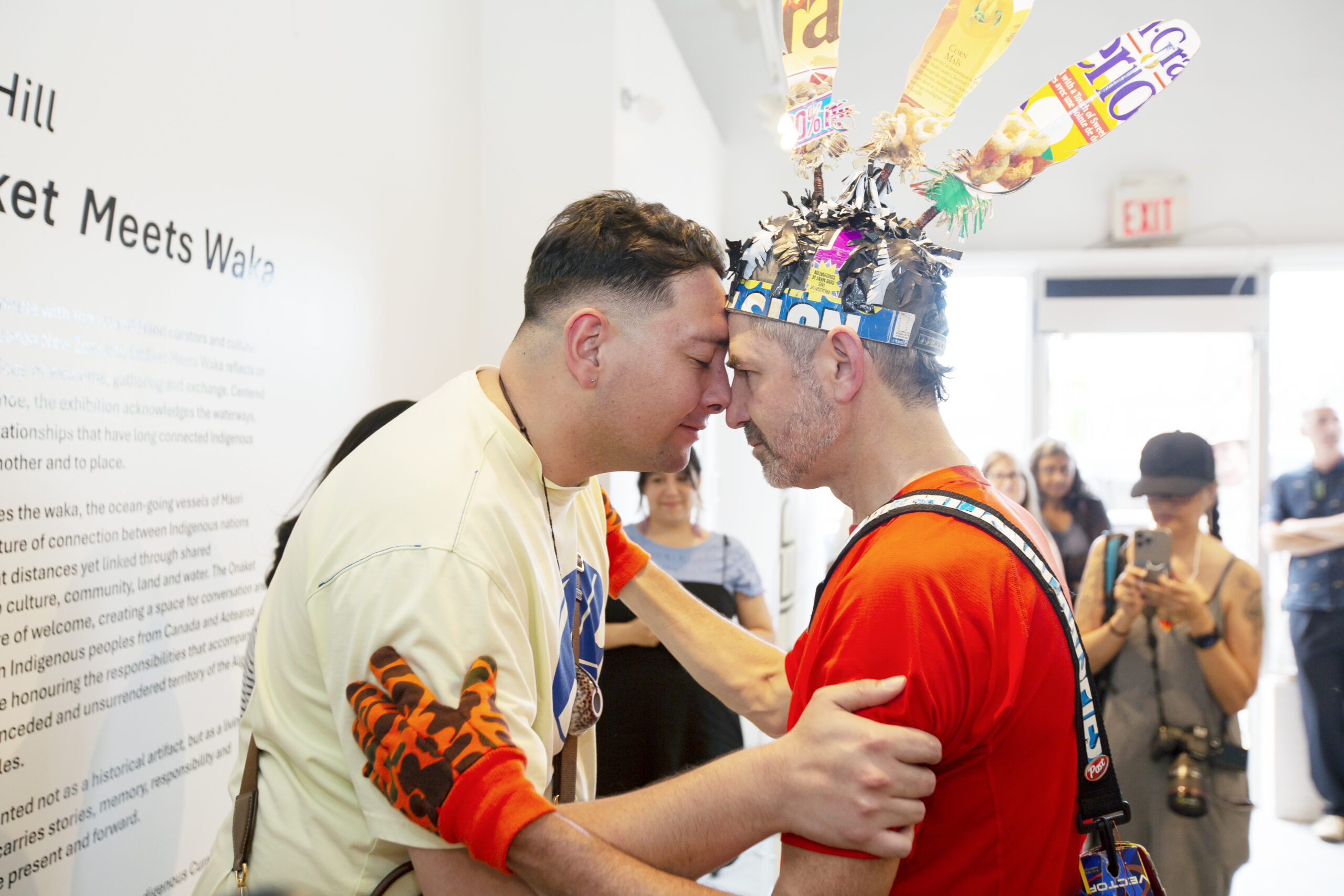
Left to Right: Anthony Rodgar, Jason Baerg, Hāmiora Bailey, Tehani Buchanan @ the National Gallery of Canada. Photography Credit: Liz Barron
2026 Regional Gathering & Delegation Ottawa – Photography Credit Tracey Lynne Photography
In our language it is our women who
Bind us fast to the tides of the ocean.
Bind fast the threads of humanity.
Bind fast the sacred cord of connection.
Weave them together, bind them as one.
Draw together. Affirm it. Let the life force rise.
The whale calls. The seal calls. And I too call. Here stands a young orca, returned to the northern waters, to swim once more in the ocean currents, in the flowing tides of my ancestress. I stand. I sing. I give voice through the call of the orca. I greet the people. I mourn and honour the land. I call to the waters that flow before us. For this the call of before there was sound, from the great expanse of sheer potentisl, to the dampness beyond the horizon
This is the breath of Sky Father and the earth mother. This is the breath of our gentle east coast and our raging western seas. This is the same breath carried upon the four winds that sweep in from the far corners of the world. To the East, to Eagle, guardian who stands in dignity and vision. To the South, to Wolf, guardian who walks the pathways of the ancestors. To the West, to Bear, guardian rooted in the earth, holding strength and courage. To the North, to Buffalo, guardian of the ancestors of this land, standing with mana and authority. Greetings to you, guardians of the four winds, who shelter the people and protect the treasures handed down through the generations.
To the Indigenous peoples who have welcomed us in our time here — to the Inuit, to the First Nations, to the peoples of Alaska, to the Sámi, to the peoples of Kalaallit Nunaat — I greet you. Thank you for your songs. Thank you for your languages. Thank you for your stories. Thank you for your dreams.
As rivers forever seeks its ocean, so too do my thoughts return to the waters here. To Kichi Sibi, the great river that flows through this land. Its waters flow onward into the Saint Lawrence. The Saint Lawrence flows onward into the great Atlantic Ocean. And the Atlantic reaches out to the vast oceans of the world. These are the same waters that touch the shores of this place. The same waters that wash upon the coasts of the Pacific. The same waters that carry songs, stories, dreams, and genealogies across the world.
Therefore I acknowledge the Anishinaabe Nation, guardians of this land, guardians of these waters. My thoughts now return to the women. To the women who carried humanity forward. To the women who carried the stories. To the women who carried the songs. To the women who carried the dreams. To Julia Butler. To her mother, Rebekah Norton. I am the seventh generation descended from Rebekah. Yet I do not believe seven generations truly separate us.
Often genealogy is spoken of as a single line. For me, genealogy is not a line alone. It is a tide. A current. A flowing stream. A wave. An ocean. Like the waters of Kichi Sibi flowing into the Saint Lawrence, and the Saint Lawrence flowing into the Atlantic. The waters do not end. Nor are they ever lost. They simply turn, and return again. Our ancestors are not only behind us. They are before us. They are within us. They arrive in song. In language. In stories. In people we have not yet met. In art. That is why I believe time is not a line. It is an ocean. Vast. Deep. Endless.
Since arriving here, I have felt the power of the knowledge held by these lands. I have seen the shimmering light of the Ocean beneath the Southern Ice. I have heard the voice of Qillinaq. I have heard it in song. In language. In stories. In art. And through these gifts, my understanding of the world has changed. To the Indigenous peoples who have welcomed us here, I offer my gratitude. For you remind me we are one. We are earth. Nunat nunat nunat.
I am of the Pacific Ocean. A descendant of Murirangawhenua. An heir of the great waters. And now I have returned. Not a return to a single home. But a return to a relationship. A return to a echoe. To let my ancestress Rebecca know that her voice still rings, That her daughter who married a scottish whaler and descended from the turle to stingray, met a woman just like her. Who maintained her voice. To offers greetings. to sing. to awaken memories that have slept for a long time.
Therefore, to the waters of Kichi Sibi, to the waters of the Saint Lawrence, to the great Atlantic Ocean, to the Pacific Ocean— there is but one water. There is but one heartbeat. There is but one call. And so, to the leaders, the voices, and the peoples gathered here today, I acknowledge you with all of who i am, i acknowledge you again in all you are, i acknowledge it all.

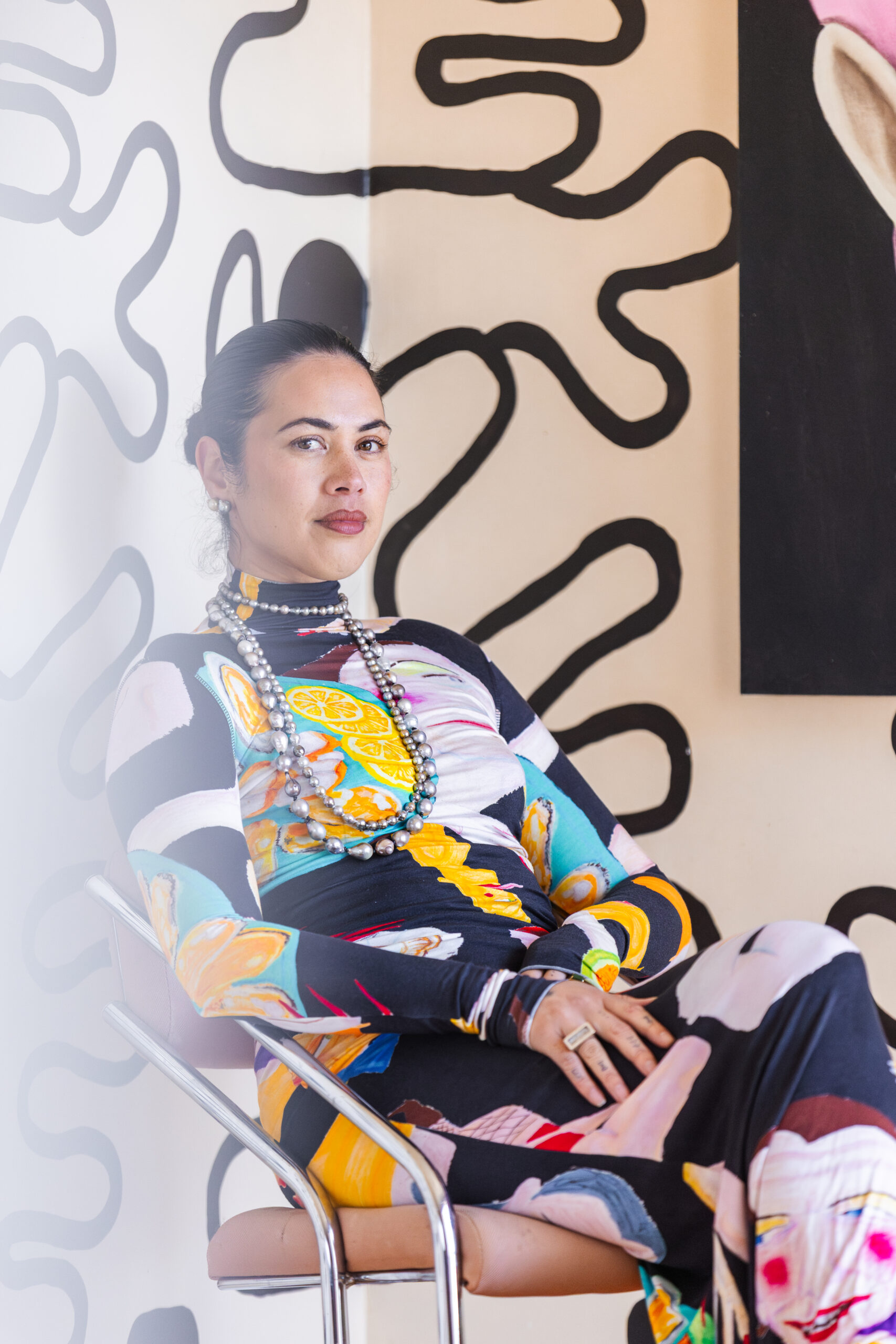
Hāmiora Bailey (Ngāti Porou ki Harataunga, Ngāti Huarere) is an Indigenous and queer cultural architect based in Tāmaki Makaurau. As Director of Auckland Pride, he has led the organisation’s transformation from a seasonal festival into year-round cultural infrastructure, establishing residencies, commissioning models, and development pathways that support Takatāpui, MVPFAFF+ and Rainbow artists to become transformational storytellers.
His practice spans public art, social practice, videography and sculpture, creating works that move people through space and time, grounding contemporary experience in whakapapa, personal memory and collective futures. Grounded in Karangahape Road—one of Aotearoa’s most significant queer and trans corridors—his work centres intergenerational exchange, advocacy and artistic experimentation.
The curatorial essays presented as part of Tides & Currents: Birchbark Meets Waka are supported by the Indigenous Curatorial Collective / Collectif des commissaires autochtones (ICCA) through its International Delegation Program, in partnership with the Pātaka Foundation and supported by Creative New Zealand. This initiative fosters global exchange and mentorship between Indigenous curators, artists, and cultural leaders across Turtle Island and Aotearoa New Zealand, encouraging international collaboration, institutional engagement, and critical writing rooted in Indigenous methodologies. Through Tides & Currents, participants co-developed critical responses, reflective essays, and artistic dialogues that honor intergenerational knowledge, cultural continuity, and the transformative curatorial practices shaping the future of global Indigenous contemporary art.
Share This Article

Written by : Publications
Follow Us on Social Media
Join our Membership
September 29, 2026
September 29, 2026
September 29, 2026