
Ancestral Journey of the Glass Seed
Exploring Métis and Venetian beading histories
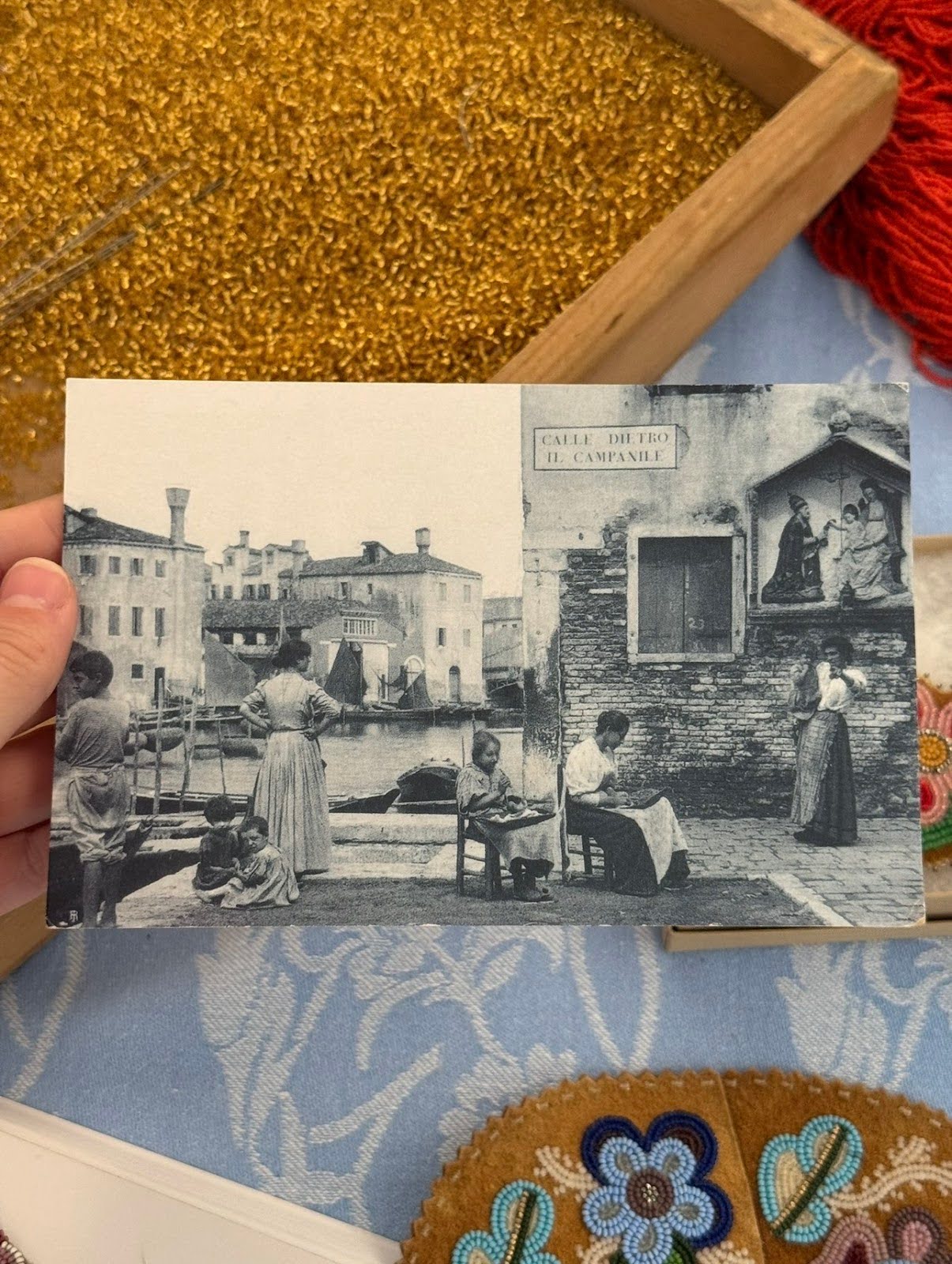
An historic image Marisa showed me of impiraresse stringing beads communally in the streets of Venice. Photography Credit: Claire Johnston
By Claire Johnston
Note: the term “ancestor” is often referred to in this article interchangeably as meaning both Métis ancestral artists and Métis ancestral material artworks.
Venetian Beads & Ancestor Beadwork
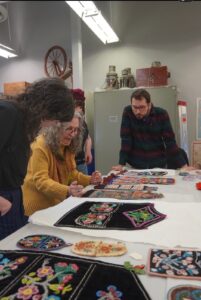
Visiting the Manitoba Museum Collections with Jennine Krauchi. Also pictured, Métis beadwork artists David Heinrichs, Vi Houssin, and Brianna Oversby. Photography Credit: Claire Johnston
In Fall 2022, I stood absolutely awestruck viewing thousands of tiny antique beads stitched skillfully on Métis ancestor beadwork pieces at the Manitoba Museum. They were beads in sizes, shades and finishes I had never seen. I was visiting the museum collections for the first time with Master Métis beadwork artist Jennine Krauchi and a small group of us. We were learning how to cultivate relationships with these ancestors through visiting, listening, and gentle curiosity. Jennine guided us through Métis floral beaded wall pockets, watch pockets, valences, octopus bags, and moccasins. She spoke of their design composition, assembly, use of materials (often including beautiful Venetian beads), and other information like approximate age and their location of origin. While those who created these masterpieces are unnamed, Jennine reminded us that these ancestors dreamed of us learning from them, and that they smile when we create works inspired by and in relation to them.
This first visit to the museum with Jennine was formative for me. It started what would become a deep ongoing relationship of learning from the ancestor Métis beadwork pieces, and a curiosity for every part of their creation.
Visiting the birthplace of our ancestors’ beads
This past fall, in what felt like a dream, I spent a month in Venice studying Venetian conterie (seed beads) as a recipient of the Canada Council for the Arts Venice Fellowship. The Fellowship supports early-career architects and visual artists in Canada to explore a topic of their choosing in Venice while gaining practical work experience at the Canada Pavilion during the Venice Biennale of Architecture. I wanted to gain a richer understanding of the materiality of Métis beadwork by researching the connections between Métis women and the Venetians who created their beads. During my month in Venice, I had the opportunity to visit with two incredible Venetian women– Marisa Convento and Luisa Convento – who broadened my understanding of Venetian conterie and the integral role of the impiraressa (traditional bead threader).
I was led to the island of Murano by a suggestion from an antique shop owner I had met. She told me to visit the studio of a specific glassblowing artist whose family members had once owned a seed bead factory. I had a name and an address and found the artist in his tiny studio. I introduced myself and shared that I was in Venice to research the Venetian conterie that were so precious to my ancestors on Turtle Island. I showed him my Métis floral beadwork and described my interest in hearing stories from Venetian families involved in seed bead production.
His response was to question why I would care about Venetian conterie, since the best laser cut beads were now being produced in Japan. I tried to describe the unmatched quality of materials used in historic Venetian glass bead production while he shared with me that he himself doesn’t use Venetian glass in his glassblowing, as he can source it for cheaper from elsewhere. He told me that the era of Venetian conterie was dead and that when production left the island, there had been weeks of bulk shipping whatever beads were left to the United States and around the world.
I left the conversation feeling sad, frustrated and misunderstood. Colour recipes for Venetian seed beads came through hundreds of years of experimentation and fine-tuning. Nicole Anderson in The Glory of Beads describes that they required fine materials, such as real gold to produce reds and pinks, cobalt for blues, and copper for greens. It was the connection to Venetian conterie as a relational material used by my ancestors on Turtle Island that drew me to Venice, not how precisely cut the beads were. He didn’t understand and I wondered why the antique owner sent me to him.
The appreciation of Venetian seed beads is hard to comprehend in today’s world of disconnection and maximum profits at the expense of cheap labour and materials. The relational nature of materials is hardly ever considered in the production of goods today. That’s not to say that the economics of historic seed bead production was necessarily perfect and relational. It was not, proven by the existence of child labour in seed bead factories, as noted in Anderson’s book. But my research sought to understand the hands and the lands that connected Venetian conterie and Turtle Island.
Marisa Convento
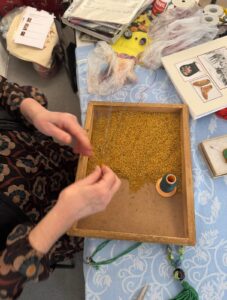
Marisa Convento’s hands showing me how to thread beads using a sessola and a palmeta. Photography Credit: Claire Johnston
Prior to travelling to Venice, I reached out to Marisa Convento, whose voice I had first heard on a podcast. She spoke about the history of Venetian seed beads, their contemporary use in her art, and her work to push for the recognition of Venetian beads as intangible cultural heritage at UNESCO. I was so excited that she was willing to meet with me, but also exceptionally nervous. To calm my nerves, I beaded for her the day before we met, making a Métis floral pin on home-tanned moose hide using Venetian beads.
When I walked into her studio, she said “oh my goodness, you’re so young. I thought you would be an old woman.” We laughed. Later, she explained that her assumption was based on the images of my work I had sent her when I first reached out to her, which touched me.
My visit with Marisa lasted over two hours. Time stood still as we sat at her beading table excitingly speaking each other’s “bead” language. Marisa shared histories of Venetian seed beads, including the roles of impiraresse, women who strung beads, in Venetian society. We sat in front of a sesolla (a curved box filled with seed beads used for manual stringing) and Marisa showed me how a palmeta (fan of very thin needles) would be used by the impiraresse to string beads into hanks. The sounds of the thin metal needles picking up the tiny glass beads felt soothing.
Marisa shared with me that many children of the impiraresse would fall asleep to this sound. As impoverished women, the impiraresse threaded beads all day to support their households. The women would sit communally outside during the day stringing beads with a sessole on their laps and be paid per completed hank. Providing ease of transportation for beads, these strung hanks were shipped to people around the world, including Métis women via the Hudson Bay Company.
It made me think—when our Grandmothers and ancestors sat communally beading together, did they know that their hanks of beads were strung in a similar fashion, communally, by the hands of Venetian women across the ocean? What if these women had spoken to one another? What would they have said? My conversation with Marisa felt like a remembering and bringing in of these ancestors—Venetian and Métis. Marisa spoke militantly about the protection of the cultural heritage of Venetian bead traditions, which mirrored my sense of protection of Métis cultural designs. Marisa and I dreamed of the possibility of an Indigenous beadwork exhibition using Venetian beads in Venice one day. I haven’t stopped thinking about this vision.
Toward the end of our visit, Marisa asked, “Have you met with Luisa Conventi yet?” She told me that Luisa had converted her uncle’s seed bead factory into a museum and studio. Someone had recommended I connect with Luisa, but I’d been unsuccessful in getting in touch. In that moment, Marisa picked up her cellphone and called Luisa directly. A few days later, I had an appointment to visit her seed bead museum and studio.
Luisa Conventi
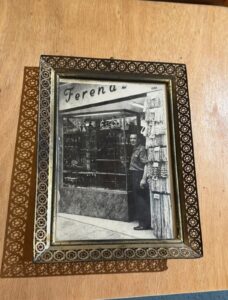
Luisa Conventi’s uncle Antonio “Toni” de Lorenzi. Photography Credit: Claire Johnston
I was extremely nervous to visit Luisa, but once again, I channeled my energy into making a floral beaded gift. When I walked in the door at Luisa’s, two women – Luisa and Julia – sat at big wooden tables full of beads, with an entire wall with drawers of beads behind them. To their right was a small museum entirely dedicated to seed bead production and history. I told Luisa who I was, about the seed bead research I was doing, and how I was grateful to meet her. I gifted her the beaded pin I’d made for her, she was shocked and touched. She told me she spoke very little English, but was happy for me to spend as much time as I wanted in the museum.
She began by showing me a photograph of her uncle Antonio de Lorenzi, who had been the owner of the Ferenaz bead company, known for inventing new types of patented beads using enamel, molten metal and clay. Luisa proudly showed me Yves Saint Laurent magazine ads featuring beaded necklaces, belts, and handbags, all using beads from her uncle’s factory. I spent an hour slowly going through Luisa’s incredible museum, as she and her friend Julia continued at their tables, crafting their beaded works. The museum featured historical information, ancestral stories, tools, beads, and objects from Luisa’s family. I viewed beaded objects I’d never seen before, like funeral wreaths and religious icons. I also saw machines, like the taierina that cut glass rods into beads.
Once I’d taken my time through the museum, I had an espresso with Luisa and Julia. We spoke about our love of old beads and lamented that contemporary beads do not compare. I shared my appreciation for the work of her ancestors and how she continues to uplift this legacy through her museum. I told her about my teacher and friend at home, Jennine, and the gratitude that I have for intergenerational knowledge transmission between women. Luisa shared that she runs a months-long apprenticeship program at her studio for Venetian women to reclaim Venetian beading traditions.
At the end of our visit, Luisa gifted me a wire beaded fish pin, which will always remind me of Venice and my time at her museum. She also gifted me coveted pink beads directly from her museum display, which overwhelmed me greatly. Pink opaque beads are prized in Métis beadwork, and these were the last of their kind from her uncle’s production. She said, “Just send me pictures of what you make and keep beading!” We had tears in our eyes as we hugged goodbye. I walked home from Luisa’s thinking about the ancestors, feeling them smiling.
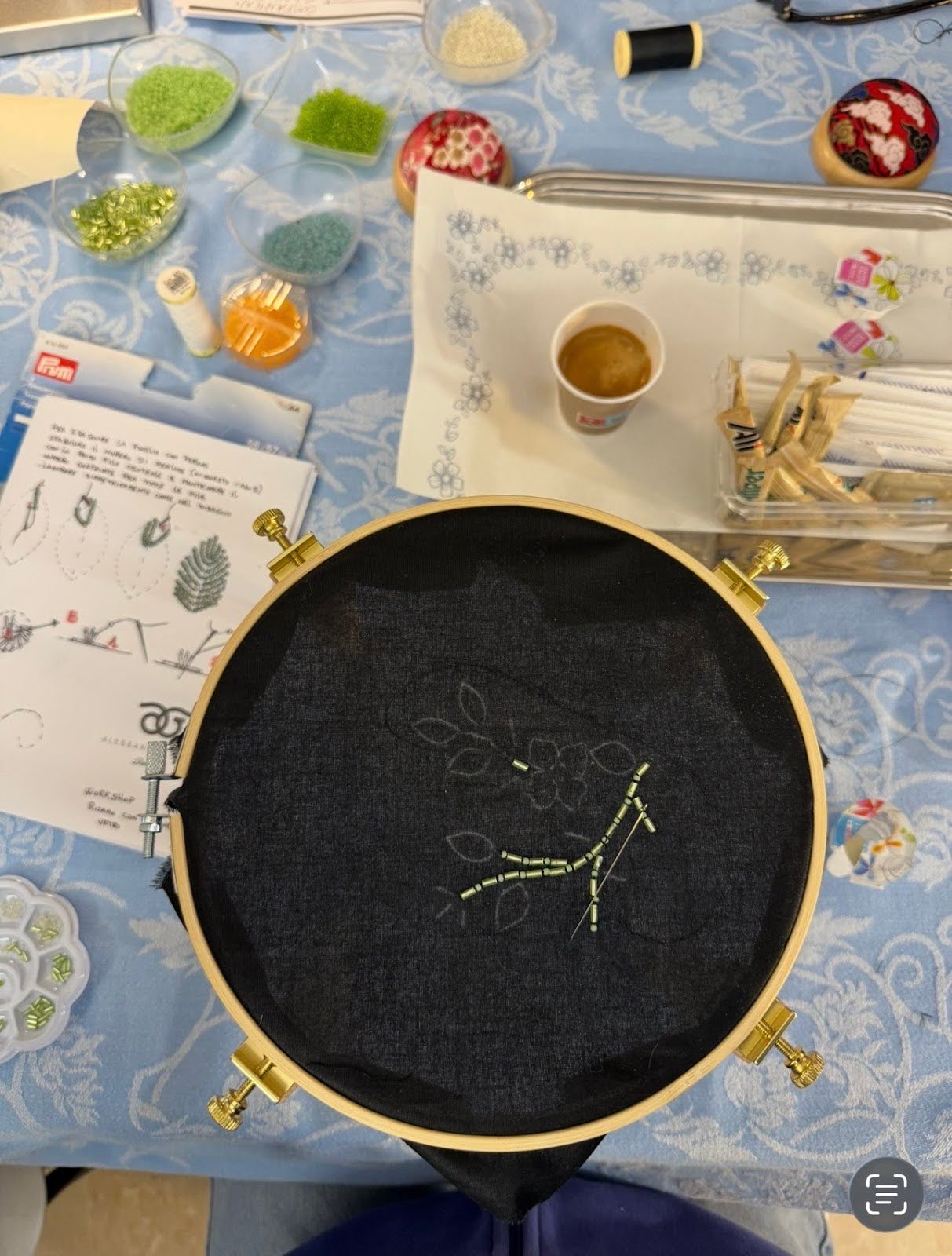
My beading and espresso at Alessandra Garau’s workshop. Photography Credit: Claire Johnston
Beading with Venetian Women
With a week left in Venice, Marisa asked me to be a special guest at a bead embroidery workshop that weekend. The workshop was held at Marisa’s studio at Bottega Cini by haute couture designer and bead embroidery artist Alessandra Garau. There were 8 of us women at the workshop, with the youngest about 11 years old and the oldest perhaps in her 70s. Alessandra led the workshop in Italian, but her excellent hands-on instruction made up for my language deficiency.
Marisa began the workshop speaking about the importance of Venetian beads and explained that the beads used in the workshop were antique beads from Costantini Glassbeads on Murano Island. She introduced me to the group, explaining that I was in Venice researching Venetian beads and that Métis people historically used Venetian beads, and that they are special and treasured by us to this day.
The workshop was a beautiful cultural exchange. Alessandra taught us how to bead embroider on a light-weight fabric using a hoop, and in return, I shared the traditional two-needle Métis style of beading on some home tanned moosehide. Many laughs were shared around the table, sometimes some swearing, too. Stories were shared of Grandmothers of the past. It felt much like a beading circle at home in Winnipeg, though the espresso breaks and the many simultaneous expressive conversations reminded me that I was in Italy. I gave Marisa a final hug goodbye, thanked her for including me in her circle while I was in Venice, and left her studio with a full heart.
While I might not have found out exactly what Venetian impiraresse and Métis ancestor artists would have known about each other, I did discover what connected them. I know that through my visits with Marisa and Luisa, and beading around the table with Venetian women, that conterie, these tiny beads, connect us in a profound way. Conterie were and are a vessel for intergenerational knowledge transfer between women. They did and do share a role in the creation of supportive communal spaces, and have always taught, and will continue to teach, an ethos of slowness, relationship, and connection.
The material traditions of our ancestors are relational webs vaster than we can imagine. Through visiting and gentle curiosity of their brilliance, whether at the Manitoba Museum or Murano Island, we can string our own beads to this web and help tell the stories that live on through our hands.
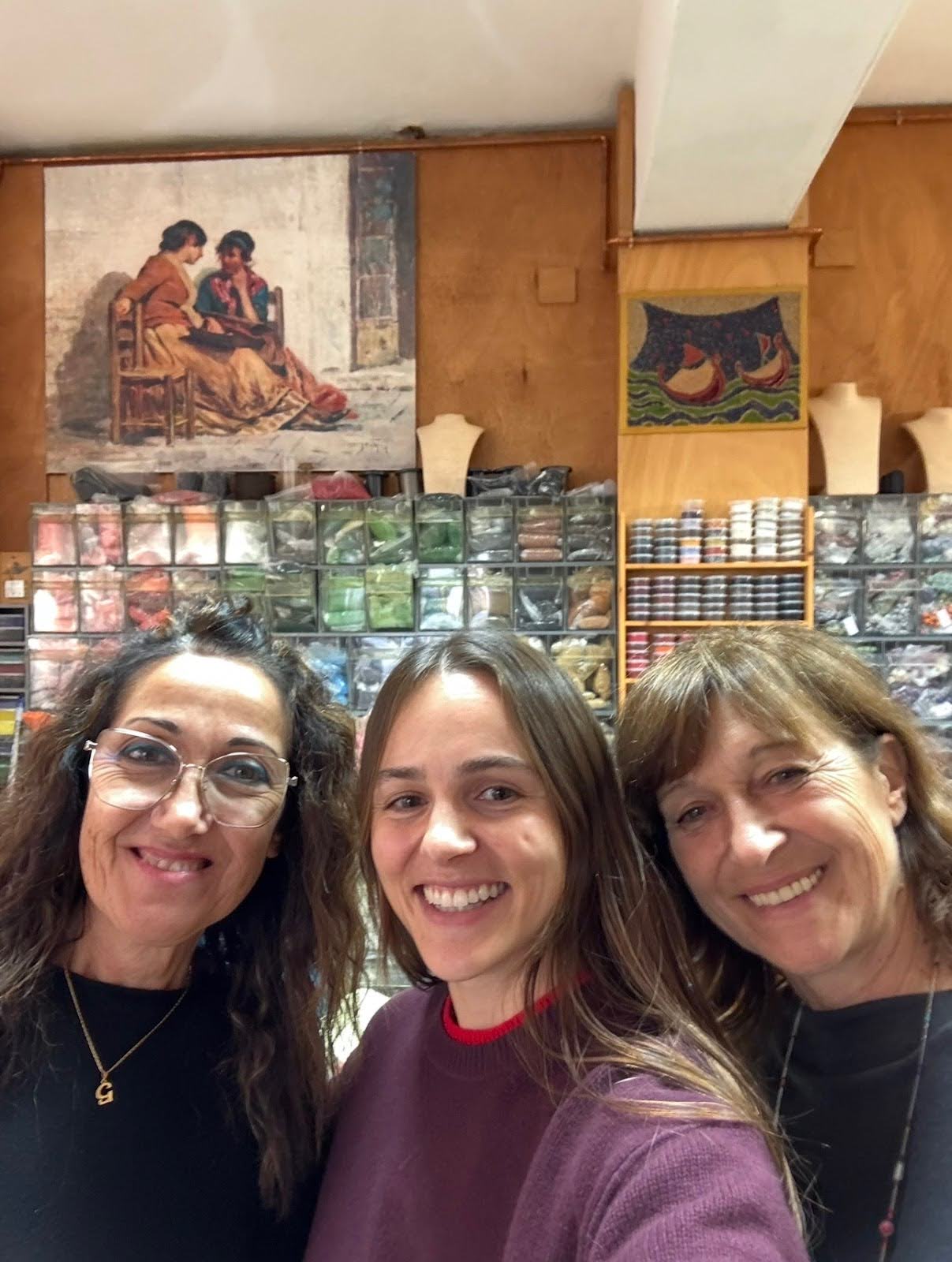
Selfie with Luisa Conventi (right) and her friend and fellow beader Julia. Photography Credit: Claire Johnston
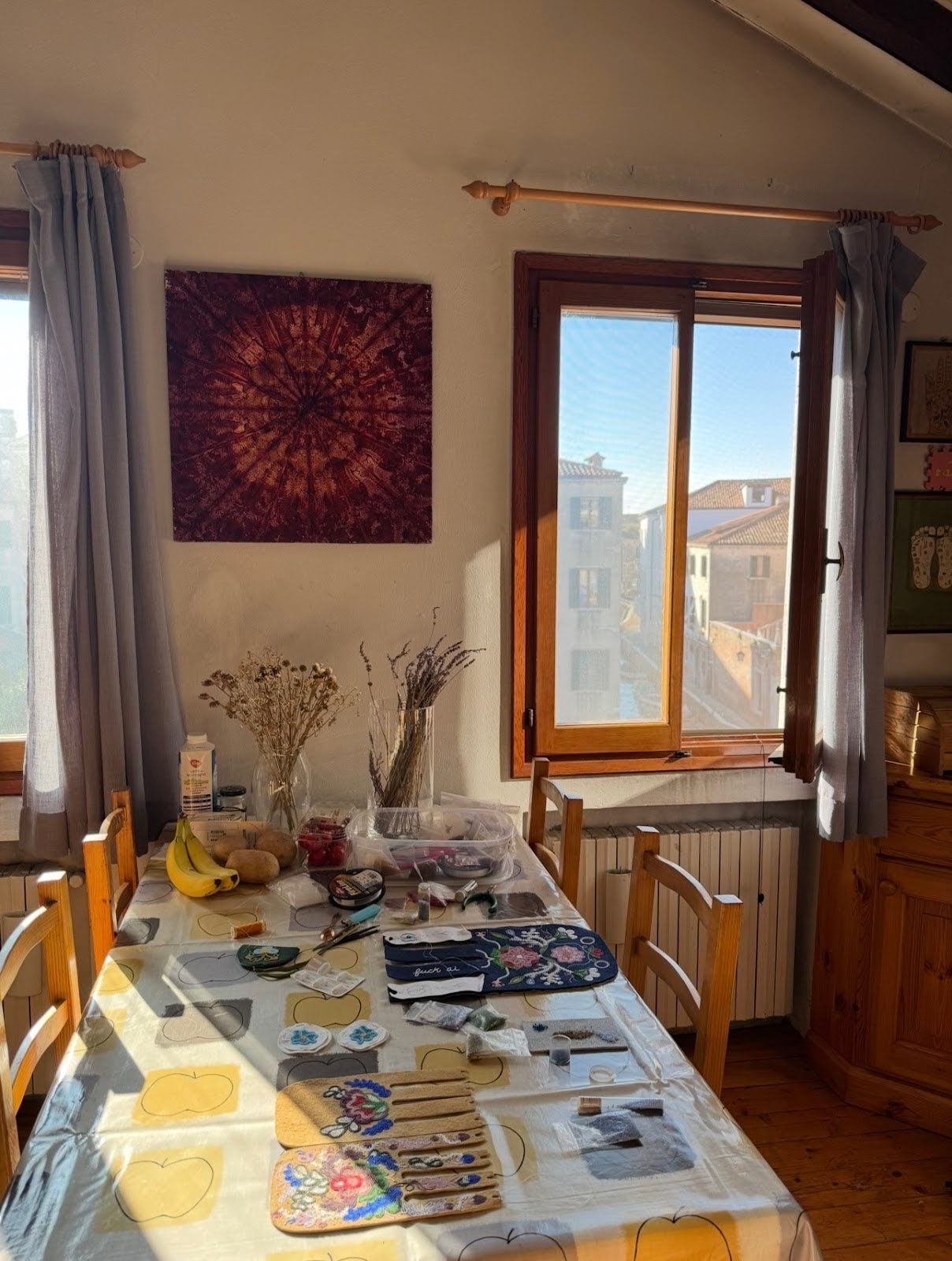
My beading set-up on the table in our shared apartment in Venice. (See the canal through the window). Photography Credit: Claire Johnston
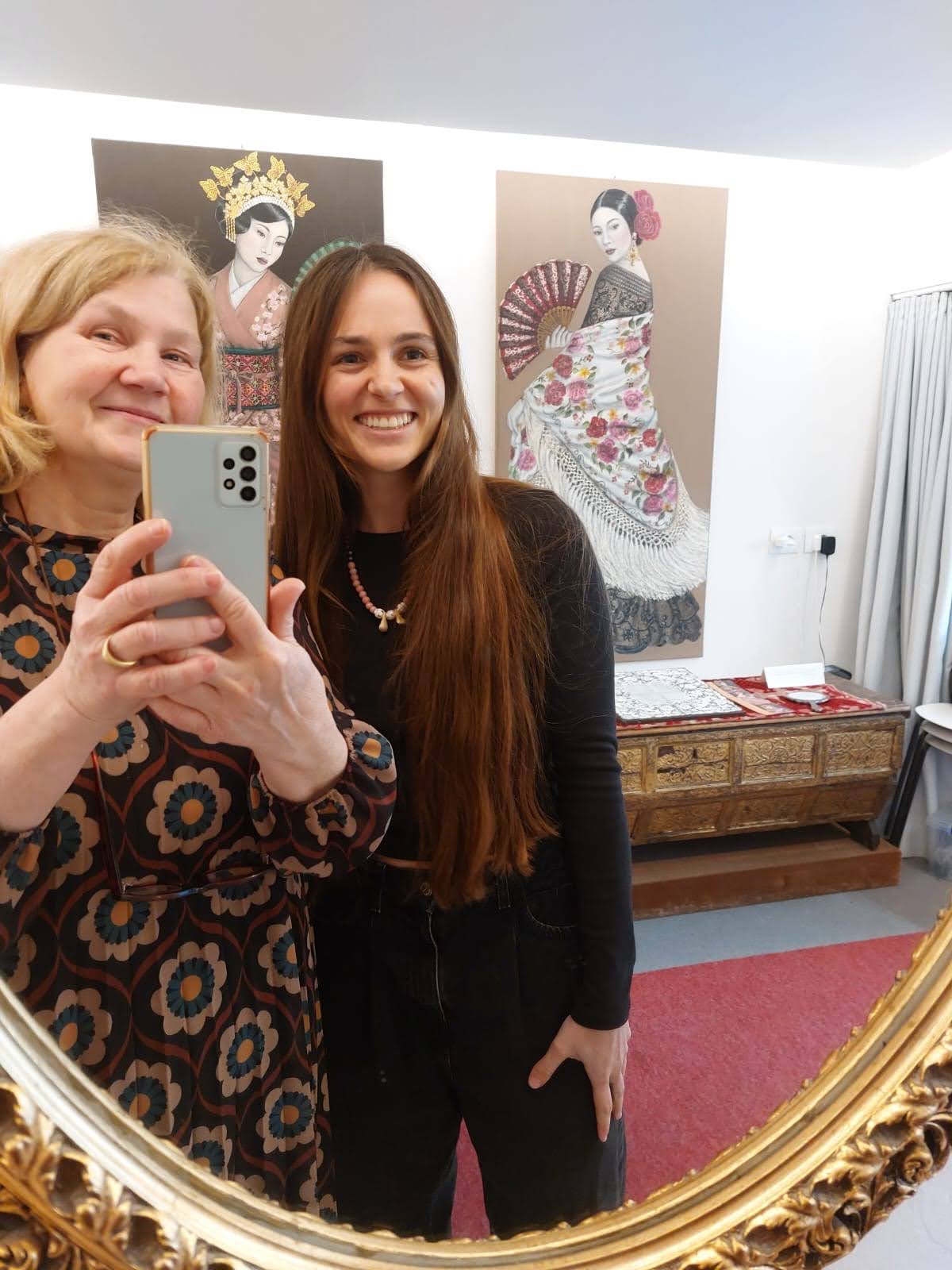
Selfie with Marisa Convento in her studio at Bottega Cini. Photography Credit: Claire Johnston
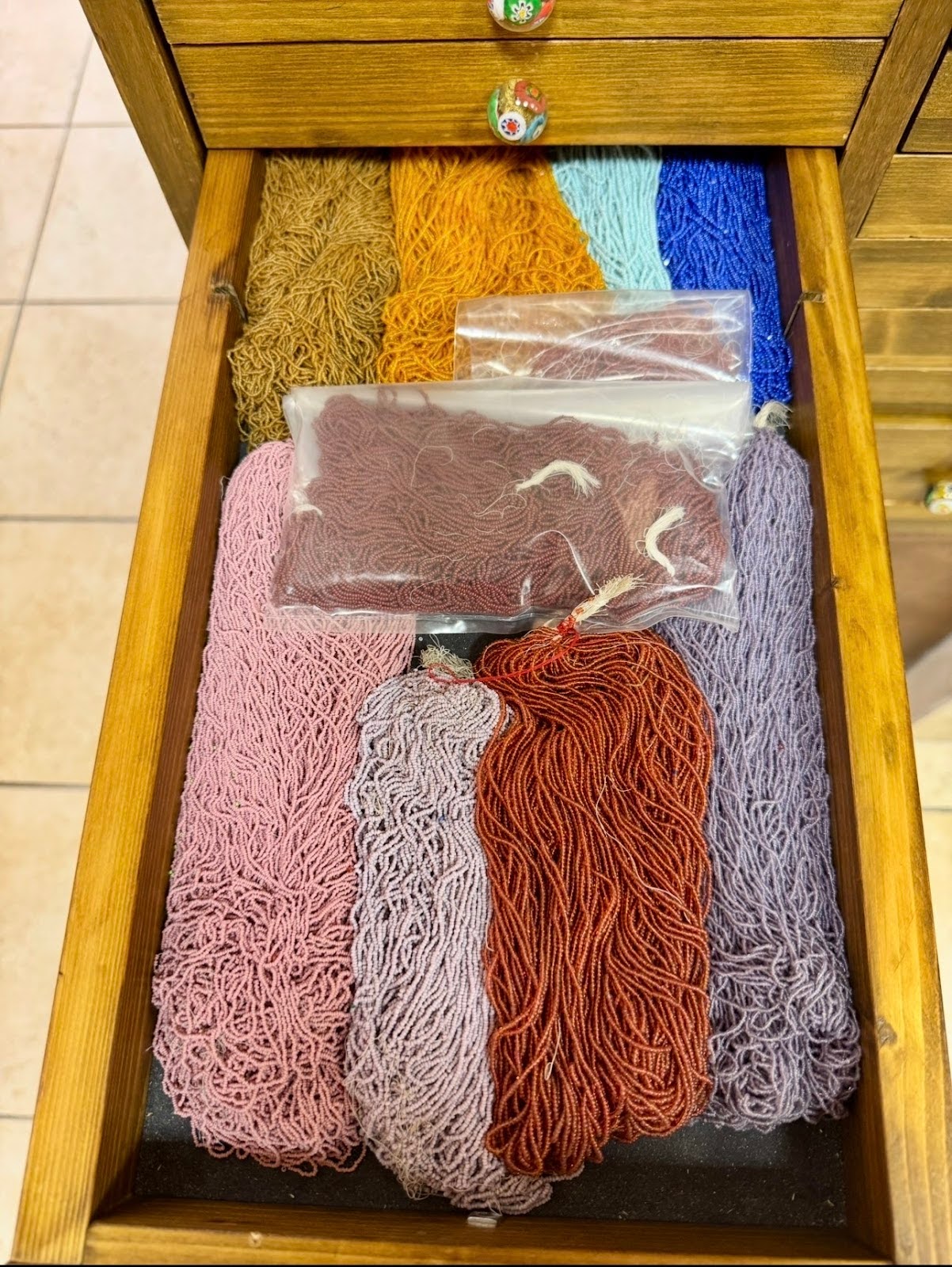
Strung conterie at Luisa Conventi’s museum. Photography Credit: Claire Johnston
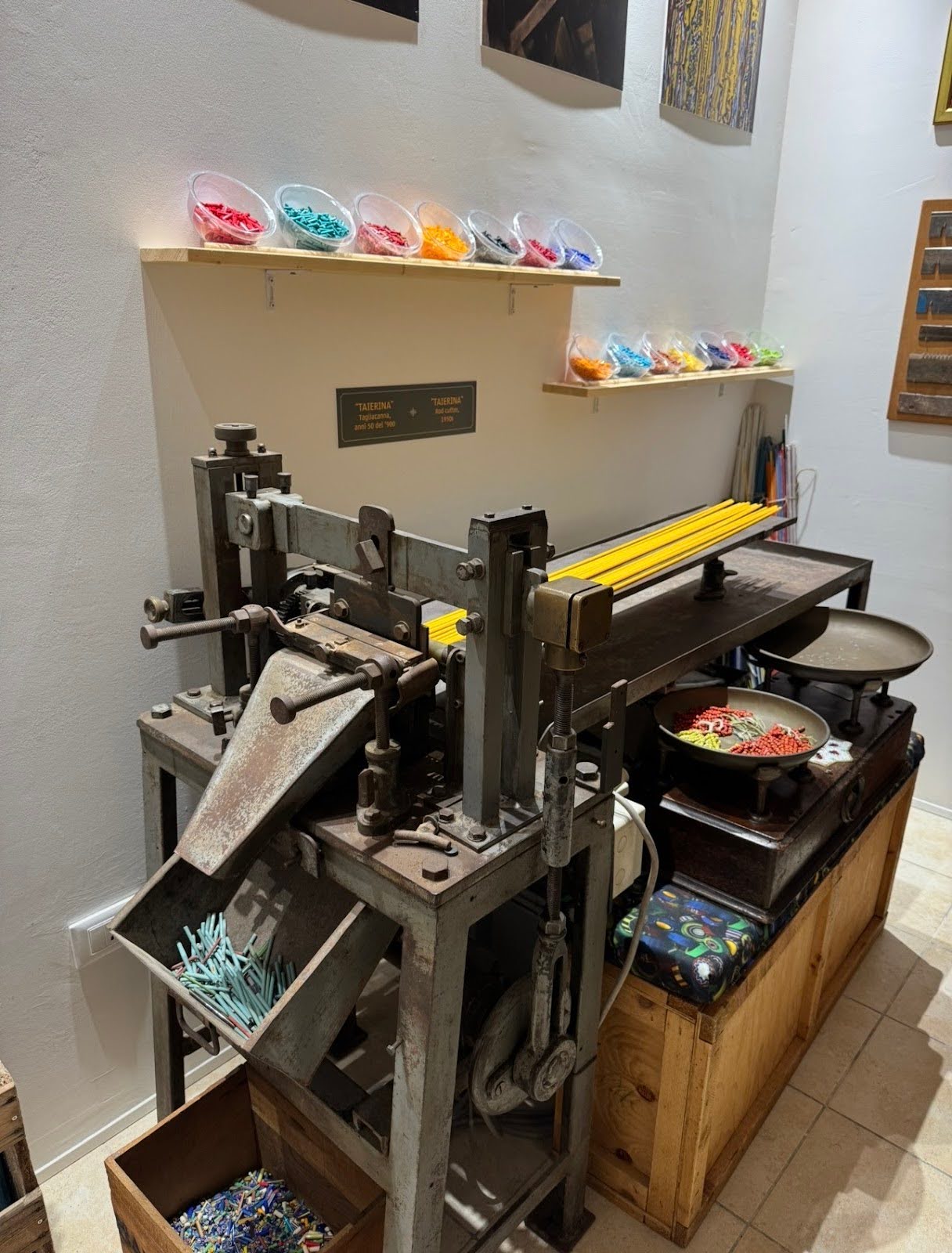
Taierina machine at Luisa Conventi’s museum, used for cutting glass rod into beads. Photography Credit: Claire Johnston
Acknowledgement: This article (“Ancestral Journey of the Glass Seed”) was originally written as part of the partnership between ICCA and Rungh Magazine. As part of our long-term collaboration, ICCA offers writing opportunities for our community members while highlighting BIPOC exhibitions and programming in Rungh.
 Heavily inspired by the aesthetics of historic Métis Grandmother beadwork pieces, Claire Johnston creates slow floral beadwork that responds relationally to the past and present. As a teacher and learner, they believe strongly in supporting Métis material art traditions, which are often laboriously sustained by Métis women and Two-Spirit people.
With an emphasis on materiality in their art practice, in 2025 Claire was selected as a Canada Council Venice Fellow to study Venetian conterie (seed beads) and their connection to Métis beadwork. During their time in Venice, they visited with impiraresse (traditional Venetian bead threaders) and gained knowledge on the history and preservation of Venetian glass bead traditions.
Claire’s work has been shown at Nuit Blanche Winnipeg (25’), Urban Shaman Gallery (Winnipeg 25’), Le Musée cantonal d’archéologie et d’histoire (Lausanne 25’), Rosemary Gallery (Winnipeg 24’), University of Manitoba School of Art Gallery (Winnipeg 24’), Tangled Arts (Toronto 22’, 24’), Festival du Voyageur (Winnipeg 24’), Venice Biennale of Architecture (Venice 23’), and The Bill Reid Gallery of Northwest Coast Art (Vancouver 22’).
Claire is currently working on a large-scale public artwork commissioned by the Winnipeg Arts Council, which is set to be unveiled in September 2026. Claire is a Sundancer, a step-parent, an auntie, and an MMF citizen with membership with the Two-Spirit Michif Local. Claire’s Métis family lines descend from St. Andrews and St. Clements, Manitoba and some of their family names include Johnston, Brown, Thomas and Richards.