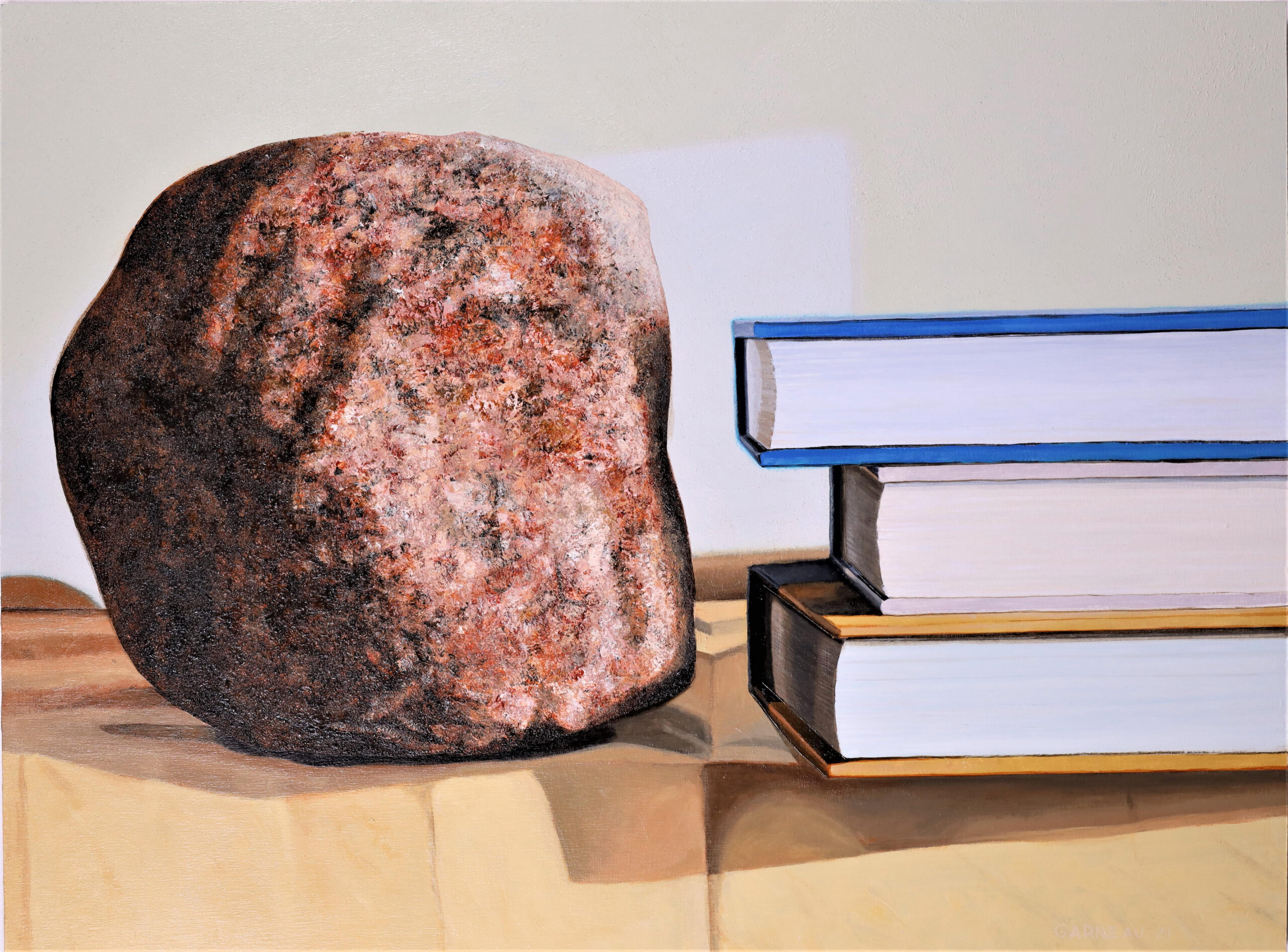
“Conciliation (Ninth Attempt),” 2021, acrylic on panel, 18” x 24” David Garneau
Creative Conciliations
Presented in partnership with the Indigenous Curatorial Collective / Collectif des commissaires autochtones (ICCA) and Wilfrid Laurier University Press (WLU Press). The digital version precedes a print edition to be published at a later date as part of WLU Press’s Indigenous series.
Preamble
Creative Conciliations emerges from long-standing dialogue among artists, curators, scholars, knowledge holders, and community members engaged in the ongoing labour of reckoning, reclamation, and restitution through artistic practice. Marking the ten-year anniversary of the Truth and Reconciliation Commission’s Final Report, the publication offers a critical lens on the limitations of institutional reconciliation agendas while making space for the relational and often unruly work of creative conciliation. Through essays, conversations, and artistic gestures, contributors return to past projects, reflect on shared and divergent responsibilities, and foreground methods rooted in friendship, hospitality, embodied memory, and collective process as ways of working across difference—without
the promise of resolution.
Publication Contributions
About the Cover Image
Quilts gather bits of everyday material culture together to make a new whole that is itself and yet also only a compilation of past things. They are like people. As a child, I was fascinated by quilts my Mum made from the family’s old clothes. Each blanket held intimate memory fragments of a generation: traces of our personal lived experiences and the tastes of that decade’s popular culture. I often lay in bed making up stories inspired by these collages. “The Hat Makes the Man” is a collage/quilt of mid-last century Classics Illustrated comic books that I read in my youth. The speech bubbles are left blank to encourage the viewer to make up their own stories. [The quilt pantings often incorporate] playful design containing subtle narrative: the clash of Settler and First Nations—wagons ring the composition, hemming in the Aboriginal people leading to violence. These paintings suggest that popular culture forms early imaginations and our sense of history and self. In his still life work, Garneau describes the complexity of being a contemporary Indigenous person, academic, and artist. Many of the paintings in this series feature books, rocks, and twine arranged to represent these joys and struggles. Indigenous knowledge keepers often feel conflicted about the need to share their knowledge and a concern that turning it into English and a text might not do the knowledge justice, and that books might displace them. The symbol of the rock, for example, refers to grandfather/Indigenous knowledge and juxtaposed with a single or stack of books, suggests that Indigenous knowledge is more than what can be contained in a book, or that Indigenous is a combination of teachings from a specific earth site and from books. Land-based knowledge grounds Indigenous ways of knowing and being, but books authored by Indigenous folks are also required if we are to provide truer representations of Indigenous people and knowledge. The choices of books—theory, biography, and literature—show the growing richness of Indigenous writing.
“Conciliation (Ninth Attempt),” 2021, acrylic on panel, 18” x 24” David Garneau
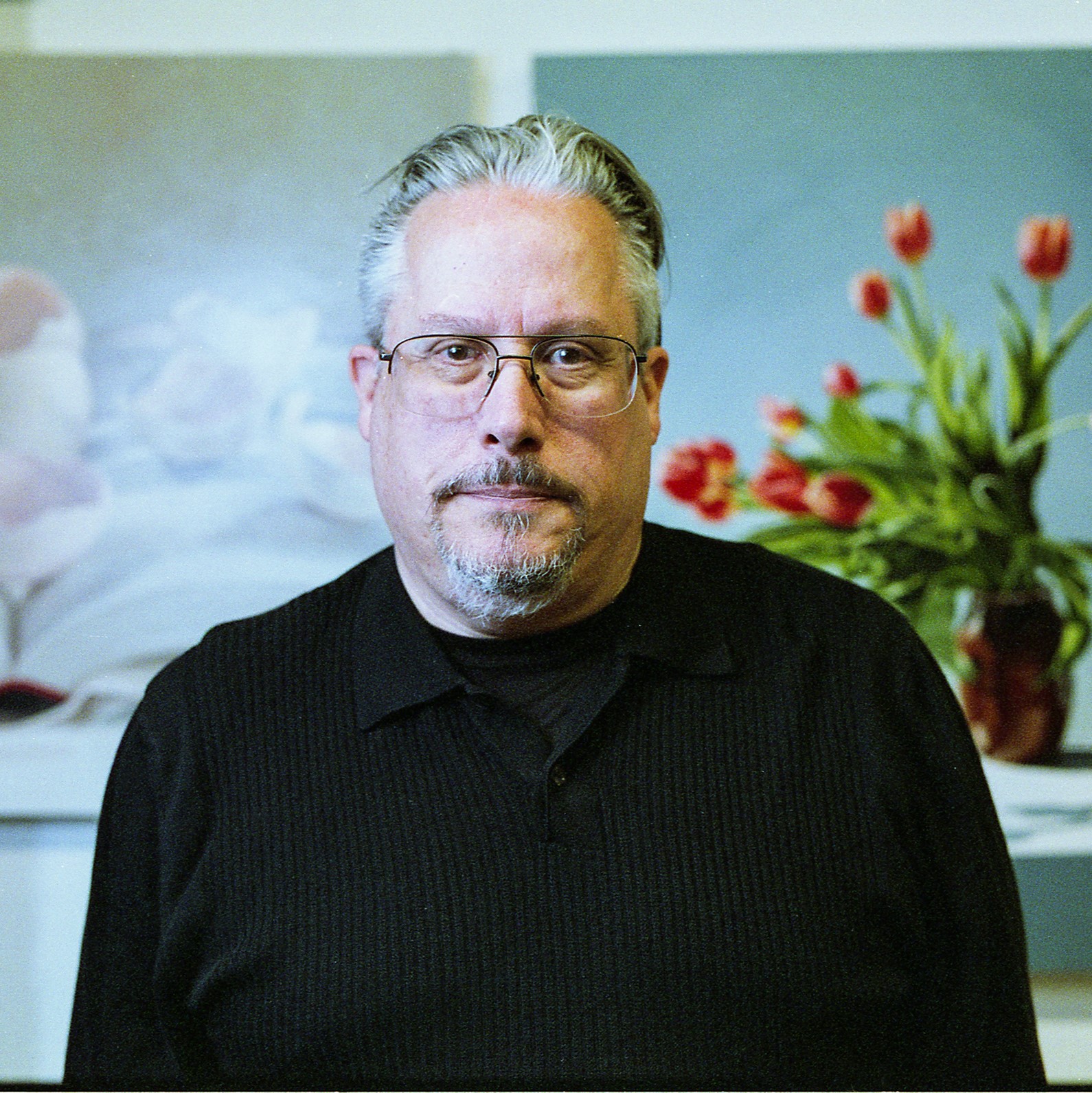
David Garneau (Métis Nation of Saskatchewan) is a Professor of Visual Arts at the University of Regina. He is a painter, writer, and curator, who engages creative and critical expressions of Indigenous contemporary ways of knowing, being, and doing. He received the Governor General’s Award in Visual and Media Art: Outstanding Achievement, was inducted into the Royal Society of Canada(2023), and received The Order of Gabriel Dumont Silver Medal and King Charles III Coronation Medal (both 2025). Garneau has curated and co-curated more than two dozen exhibitions in Canada and internationally (including the National Museum of the American Indian, NYC). He has given keynotes in Australia, New Zealand, and throughout Canada on re/conciliation, museums, Indigenous contemporary and public art. His painting exhibition, Dark Chapters tours Canada in 2025-8. It is accompanied by a book, Dark Chapters: Reading the Still Lives of David Garneau, a collection of poems and essays by seventeen authors (University of Regina Press).
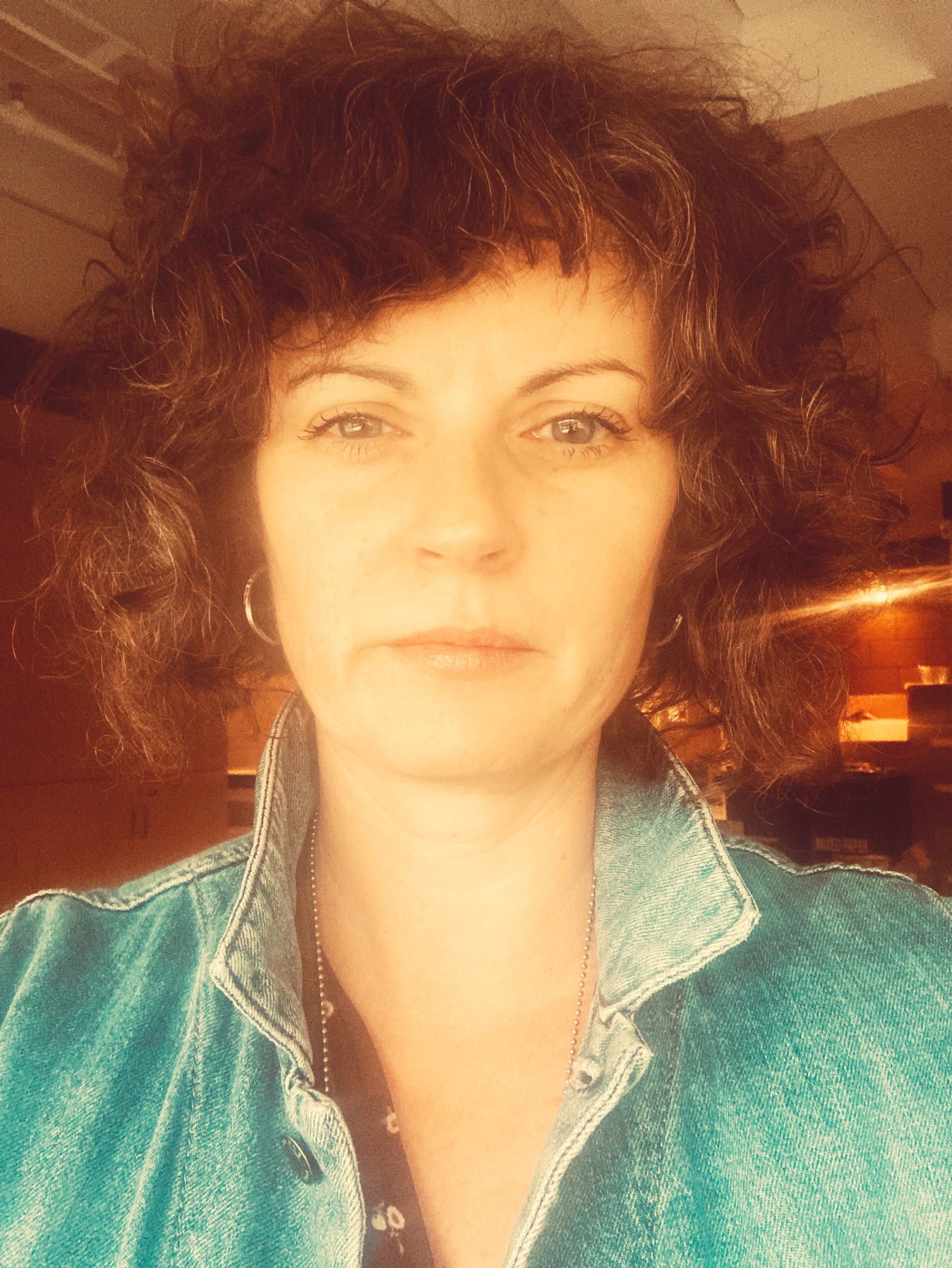
Photo credit: Mika Abbott
Editors
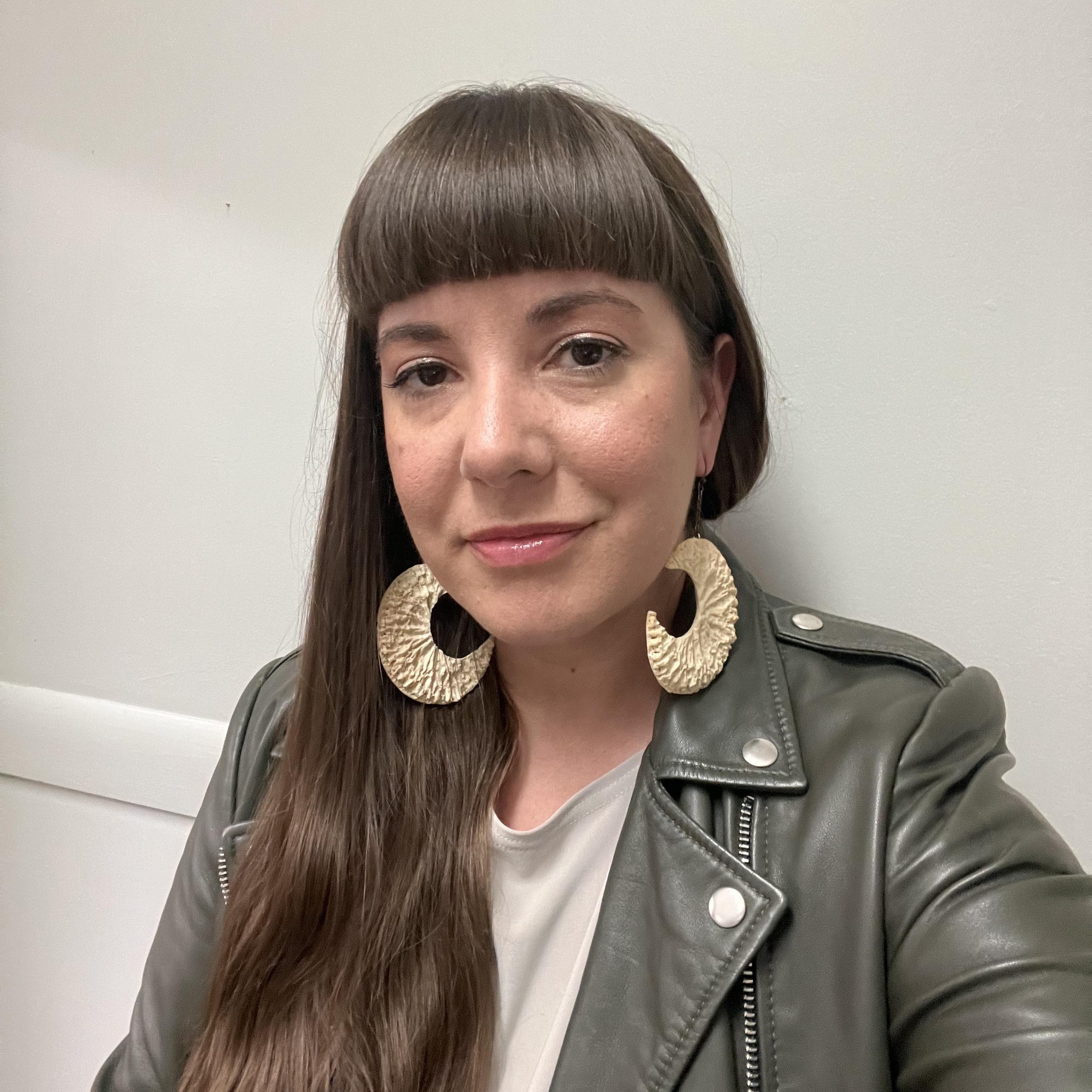
Tarah Hogue is a curator, writer, and cultural worker based in the Treaty 6 and 7 territories and the Métis homeland. In 2020, she became Remai Modern’s inaugural Curator (Indigenous Art) and recently transitioned to Adjunct Curator. Previously, she held curatorial fellowships at the Vancouver Art Gallery and the Art Gallery of Greater Victoria, served as a visiting curator at the Institute of Modern Art in Brisbane, and was curator-in-residence at grunt gallery in Vancouver. Her recent curatorial projects include Storied Objects: Métis Art in Relation (2022), with advisor Sherry Farrell Racette, which received an AAMC Award for Excellence, and the mid-career survey and monograph Adrian Stimson: Maanipokaa’iini (2021). In 2019, Hogue received the Hnatyshyn Foundation-TD Bank Group Award for Emerging Curator of Contemporary Canadian Art. She has authored catalogue essays for artists such as Maureen Gruben, Henry Tsang, Tania Willard, and Jin-me Yoon, and her writing has appeared in C Magazine, Canadian Art, The Capilano Review, and elsewhere. She holds a master’s degree in Critical and Curatorial Studies from the University of British Columbia and a Bachelor of Arts in Art History from Queen’s University. Raised in central Alberta, Hogue is of Métis and white settler ancestry and is a citizen of the Métis Nation of Alberta, with relatives from the Red River communities of St. Charles and St. François Xavier in Manitoba.
Jennifer Robinson is a settler-Canadian (English/Irish/Scottish) visual anthropologist living on lək̓ʷəŋən and W̱SÁNEĆ territories. Currently, she is Adjunct Faculty in the Department of Anthropology at the University of Victoria and a Research Associate with the Visual Stories Lab, where she has contributed various curatorial, collections, education, and repatriation projects since 2012. Jennifer is also a Research Associate with the Canadian Institute for Substance Use Research where since 2021, she has taken part in several harm reduction-focused projects under the Canadian Managed Alcohol Program Study. Since 2019, she has worked as a freelance consultant on behalf of museums, galleries, cultural centres, and Indigenous nations on various projects that support community-engaged advocacy through creative and participatory research methods and collaborations.